– 10 Facts the World Must Know
For decades, we’ve been told that India has always been a patriarchal society where women were oppressed and are treated second to men. But is that really true?
When we dig into our own history, scriptures, traditions, and practices a very different picture emerges; one where women were scholars, rulers, warriors, and spiritual guides. The so-called “patriarchy” narrative often comes from colonial distortions and selective quoting of Hindu texts.
Let’s bust the myth with facts.
-
Vedic India Celebrated Women as Scholars
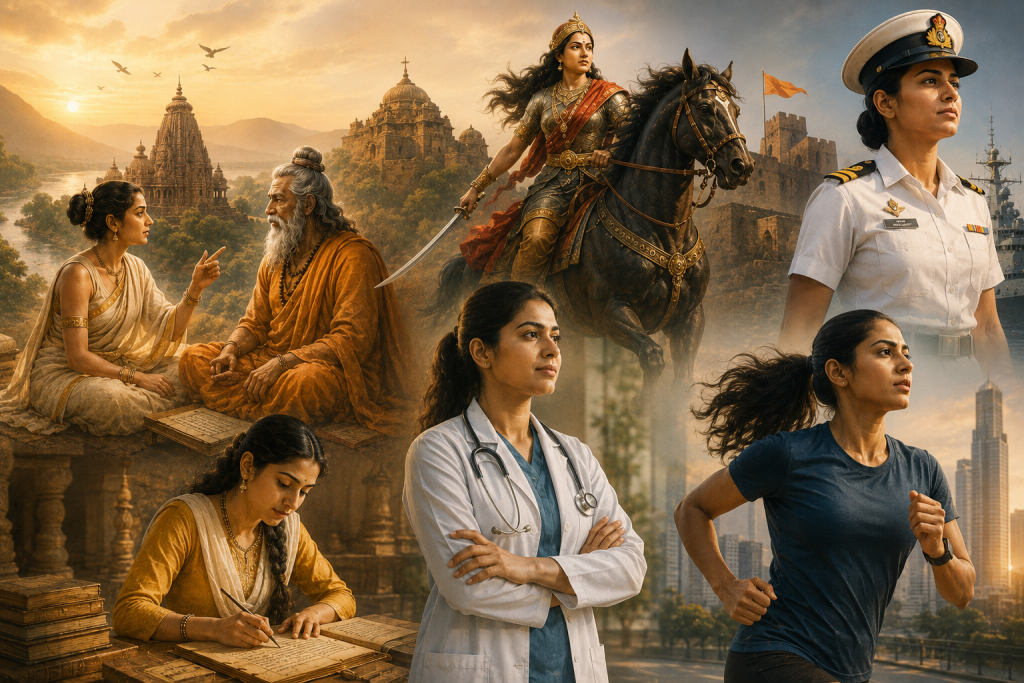
The Vedic literature makes special mention of Vidushis, learned women of great intellect. Figures like Gargi Vachaknavi, Lopamudra, and Maitreyi were renowned for engaging in profound philosophical debates with men and earning their respect as intellectual equals. In the Brihadaranyaka Upanishad, Gargi famously challenges the sage Yajnavalkya on the very nature of the universe. No so‑called “patriarch” stood in her way.
-
Women Had the Right to Choose Their Life Path
Women could remain unmarried as Brahmacharinis, choose a husband through Swayamvara, or even live as ascetics. For instance, Sita, daughter of Raja Janaka, chose Rama as her husband, while Draupadi, daughter of Raja Drupada, chose Arjuna. Similarly, Savitri, in her quest for a life partner, travelled to distant lands, visited numerous ashramas, holy shrines, and important cities, until she found Satyavan, an ordinary woodcutter, yet a man of truth and virtue. Kaikeyi, another shining example, was a skilled warrior who saved her husband, King Dasharatha, in a battle.
-
Property Rights Were Ancient, Not Western Gifts
Our ancient law texts recognised Stridhana i.e. wealth exclusively owned by a woman, which not even her husband could claim. Even the Manusmriti upholds this principle of fairness, stating that ancestral property should be equally divided among daughters and sons (Manusmriti 9.192). We find no significant historical instances where women had to wage prolonged struggles for their rights; in fact, whenever such a need arose, men themselves stood up to safeguard those rights.
-
Not only Kingdoms, we had Queendoms as well
From Rani Durgavati and Ahilyabai Holkar to the valiant Queen of Kittur Chennamma and Rani Gaidinliu of Nagaland, Indian history is rich with women who stood at the helm of governance and resistance. Even in modern times, India has had both a woman Prime Minister and a woman President; while the so‑called “most advanced” nation, the United States, has not elected a single female president in over 225 years of its democratic history.
-
Shakti – The Feminine as the Source of Power
In Hindu thought, even the gods are powerless without Shakti. Shiva without Shakti, Vishnu without Lakshmi, and Brahma without Saraswati are considered incomplete. Goddesses like Durga, Kali, Lakshmi, and Saraswati are not mere “consorts” but supreme powers in their own right; creators, sustainers, and protectors of the universe.
-
Education Was Never Male-Only
Our civilisation has evolved a natural gender‑neutral vocabulary long before it became a modern trend. Terms like Manav‑jati for “mankind,” Jan‑shakti for “manpower,” and Hast‑nirmit for “man‑made” show the inclusiveness of our civilization. Women in ancient India studied the Vedas, Sanskrit grammar, astronomy, and medicine. Notable examples include Katyayani, the philosopher‑saint, and Lilavati, the mathematician whose work inspired Bhaskara’s famous text Lilavati.
-
Matrilineal Traditions Flourished
Across different regions of India, several Hindu communities follow matrilineal inheritance, where property and lineage pass through the mother’s line. The Nairs of Kerala, Khasis of Meghalaya, and Bunts of Tulu Nadu in Karnataka are notable examples of the practices that stand in complete contrast to conventional patriarchal norms.
-
Widow Remarriage Was Allowed from the Ancient Times
The Vedic system permitted remarriage or sanctioned procreation after a husband’s death to ensure social and family continuity. In fact, the Rigveda (10.18.8) blesses a woman at her second marriage with progeny and prosperity in her lifetime, affirming not only her right to her husband’s wealth but also her right to live with full dignity and honour within the family.
-
Women Centric Traditions
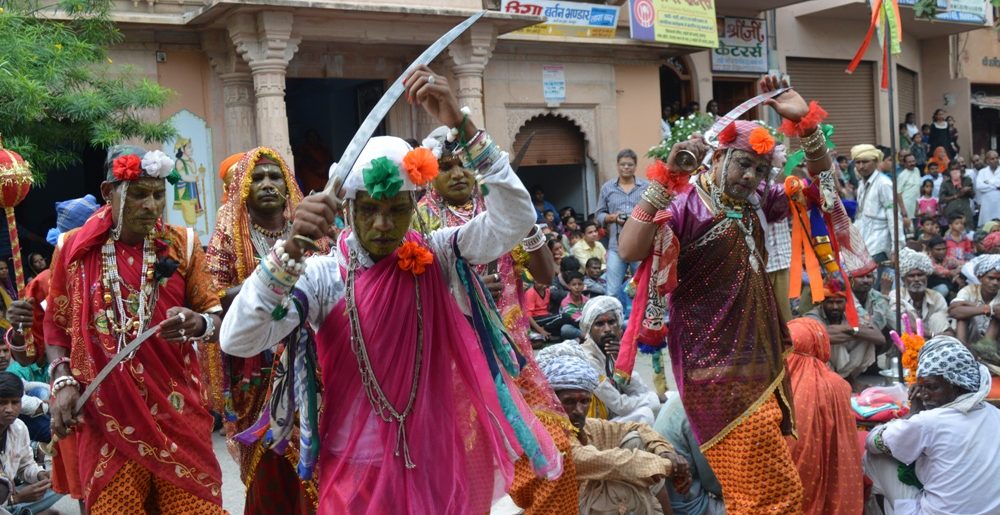
A large number of Indian festivals are women‑centric and deeply empowering; such as Kanya Pujan, Navratri, Teej, Gangaur, Rakshabandhan, and Attukal Pongala. These festivals are celebrating womanhood, strength, and nurturing power in its own unique way. In fact, many tribal communities in India have women serving as head priests or custodians of land. In several regions, women lead major harvest rituals and festivals.
-
Modern Rights Are Rooted in Ancient Culture
It was not for the first time that our Constitution affirmed women’s rights; indeed, it merely re‑established values already cherished in Dharma. The right to choose a husband, the right to property, and the right to education were age‑old principles of Bharat. These rights weakened during the long periods of Mughal and British invasions.
Colonial powers and missionaries, in particular, sought to portray India as backward to justify their so‑called “civilising mission” and political domination. They selectively quoted our texts while ignoring empowering ones, erased the glorious examples of powerful women from our textbooks, and crafted a distorted narrative to suit their own objectives and vested interests.
Concluding Remarks
Hindu society has its own challenges like any other civilisation; but calling it “patriarchal” in the Western sense is misleading. Our history reflects a harmonious balance of Shakti and Shiva, where the feminine is not merely respected but revered. Our worldview does not see society in fragments. We hold an integral perspective of inclusiveness, one that does not permit the suppression of any section of humankind.
Dr. Amit Jhalani,
Convener, Centre for Social and Cultural Studies Rajasthan